
Menu
Moisturizing for Healthier Skin
Simple habits that reduce itching, prevent flare-ups, and help your treatments work better.
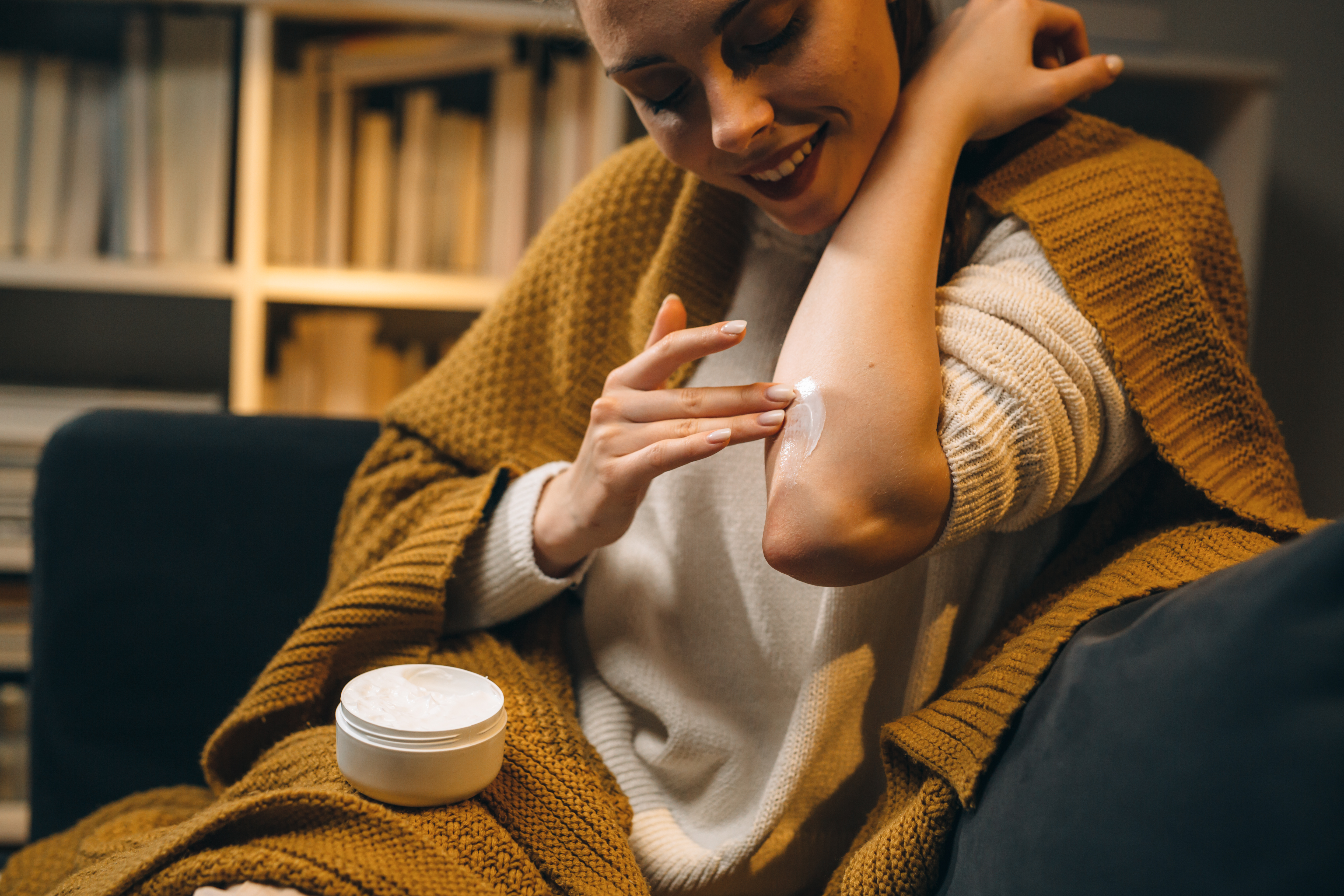
Why Does Moisturizing Matter?
For people with eczema or psoriasis, moisturizing isn't just skincare — it's medicine.
Repairs Your Skin Barrier
Your skin works like a wall — keeping moisture in and irritants out. Eczema and psoriasis weaken that wall. Moisturizing helps fix it.
Reduces Itching and Pain
Dry skin itches — a lot. Moisturizing regularly keeps your skin hydrated, which means less itching, less scratching, and more comfort.
Helps Prevent Flare-Ups
Studies show that moisturizing daily can reduce how often your skin flares up. It also makes your prescription treatments work better.
Based on AAD Guidelines for Psoriasis (Elmets et al., 2021) and Atopic Dermatitis (Sidbury et al., 2023)
How to Moisturize Your Skin
Simple steps that make a big difference — click your condition below
Step-by-Step Guide / Soak & Seal Method
1
Bathe in lukewarm water
Use warm — not hot — water for 5–10 minutes. Hot water dries your skin out.
2
Use a gentle, soap-free wash
Avoid anything with fragrance or foaming soap. Look for "fragrance-free" on the label.
3
Pat dry — gently
Pat your skin with a soft towel. Never rub — rubbing can irritate and trigger a flare.
4
Moisturize within 3 minutes
Apply while skin is still slightly damp. This "soak and seal" step locks in water.
5
Repeat 2–3 times per day
More often during a flare-up or in dry winter weather. Consistency is key.
What to Look For in a Moisturizer
Ceramides Rebuilds your skin's protective wall. A top ingredient for eczema.
Glycerin Draws moisture into the skin and keeps it there all day.
Colloidal Oatmeal Calms itching and redness. FDA-recognized for eczema care.
Petrolatum (e.g., Vaseline) Best at sealing moisture in — especially during flare-ups.
Niacinamide (Vitamin B3) Reduces inflammation and helps repair the skin barrier.
Dimethicone / Shea Butter Softens skin and helps prevent water from escaping.
Tip: Always choose products labeled "fragrance-free" — not just "unscented."
Step-by-Step Guide / Daily Moisturizing Routine
1
Shower or bathe in lukewarm water
Keep showers short — 5 to 10 minutes. Hot water can trigger inflammation and worsen plaques.
2
Use a mild, fragrance-free cleanser
Harsh soaps strip protective oils. Look for gentle, non-foaming formulas designed for sensitive skin.
3
Pat skin dry — never rub
Rubbing irritates psoriasis plaques. Use a soft towel and pat gently to avoid friction.
4
Apply a thick cream or ointment immediately
Ointments work best for psoriasis — they seal in moisture longer than lotions. Apply within 3 minutes of drying.
5
Moisturize throughout the day
Reapply whenever skin feels tight or dry — especially in winter or air-conditioned spaces.
What to Look For in a Moisturizer
Salicylic Acid Helps soften and lift psoriasis scales so moisturizer absorbs better.
Urea (10–20%) Breaks down thick plaques and deeply hydrates rough, scaly skin.
Petrolatum (e.g., Vaseline) Best occlusive for psoriasis — creates a barrier that locks in moisture all day.
Ceramides Restores the skin barrier weakened by psoriasis plaques.
Lactic Acid Gently exfoliates scaly patches while hydrating at the same time.
Dimethicone / Shea Butter Softens skin and provides a protective layer over irritated patches.
Tip: Always choose products labeled "fragrance-free" — not just "unscented."
Sources: AAD Atopic Dermatitis Guidelines (Sidbury et al., 2023) · AAAAI/ACAAI Joint Task Force (Chu et al., 2024)
Do's and Don'ts of Moisturizing
DO
Moisturize right after your bath or shower
Within 3 minutes of patting skin dry — skin absorbs moisturizer best while it's still a little damp.
Use a thick cream or ointment
Thicker is usually better for eczema and psoriasis. Ointments like Vaseline are best for sealing in moisture.
Choose products labeled "fragrance-free"
"Fragrance-free" means no added scents. "Unscented" is different — it may still have masking fragrances.
Moisturize at least 2–3 times per day
The more consistently you moisturize, the better your skin can heal and stay protected between flares.
Look for ceramides, glycerin, or colloidal oatmeal
These ingredients are clinically proven to help repair and protect your skin's natural barrier.
DON'T
Use products with added fragrance or perfume
Fragrance is the #1 cause of skin reactions in people with eczema. Even "natural" scents can trigger a flare.
Use hot water when bathing
Hot water strips the natural oils from your skin. Stick with lukewarm water every time you bathe.
Rub your skin dry with a towel
Always pat gently — rubbing causes irritation and friction that can make symptoms worse.
Apply products with drying alcohol
Labels saying "alcohol denat," "isopropyl alcohol," or "ethanol" signal a product that will dry your skin out.
Skip moisturizing between flare-ups
Keeping your skin moisturized every day — even when it looks fine — is one of the best ways to prevent flares.
DO
Apply moisturizer immediately after bathing
Locking in moisture right after a shower helps prevent plaques from drying out and cracking.
Use thick ointments or creams over thin lotions
Ointments provide a stronger barrier for psoriasis-affected skin and keep moisture in longer.
Look for salicylic acid or urea
These ingredients help soften and lift psoriasis scales so your skin can better absorb treatment.
Moisturize consistently — even during remission
Daily moisturizing helps prevent new plaques from forming, not just treat existing ones.
Choose fragrance-free, dye-free formulas
Sensitive psoriasis skin reacts easily — keep ingredient lists short and clean.
DON'T
Scratch or pick at plaques
Scratching can trigger the Koebner phenomenon — causing new psoriasis patches to form at the site of injury.
Use hot water when bathing
Hot water increases inflammation. Lukewarm showers are gentler on psoriasis plaques.
Rub skin dry — always pat
Rubbing aggravates plaques and causes micro-tears that can worsen irritation.
Use alcohol-based products on affected areas
Drying alcohols strip moisture and can intensify scaling and tightness on psoriasis patches.
Skip moisturizing when skin looks clear
Psoriasis skin needs daily moisture even in remission — consistency helps prevent future flares.
Sources: AAD/NPF Guidelines · National Eczema Association · Hamann et al. JAAD 2021 · Elmets et al. JAAD 2021
Explore More from the Skin Health Hub
Continue learning about skin health, diet, and care.
Mediterranean Diet
What it is, its history, and proven health benefits.
Explore ›2025 Psoriasis Study
Summary of the MEDIPSO trial in JAMA Dermatology.
Explore ›Dr. Gilroy's Recipes
5 easy Mediterranean meals — 30 minutes or less.
Explore ›Dining Out Tips
10 tips for staying on track at any restaurant.
Explore ›